
Deepwater sharks, killed to make cosmetics, are granted new trade protections in ‘watershed moment’

EDITOR’S NOTE: Call to Earth is a CNN editorial series committed to reporting on the environmental challenges facing our planet, together with the solutions. Rolex’s Perpetual Planet Initiative has partnered with CNN to drive awareness and education around key sustainability issues and to inspire positive action.
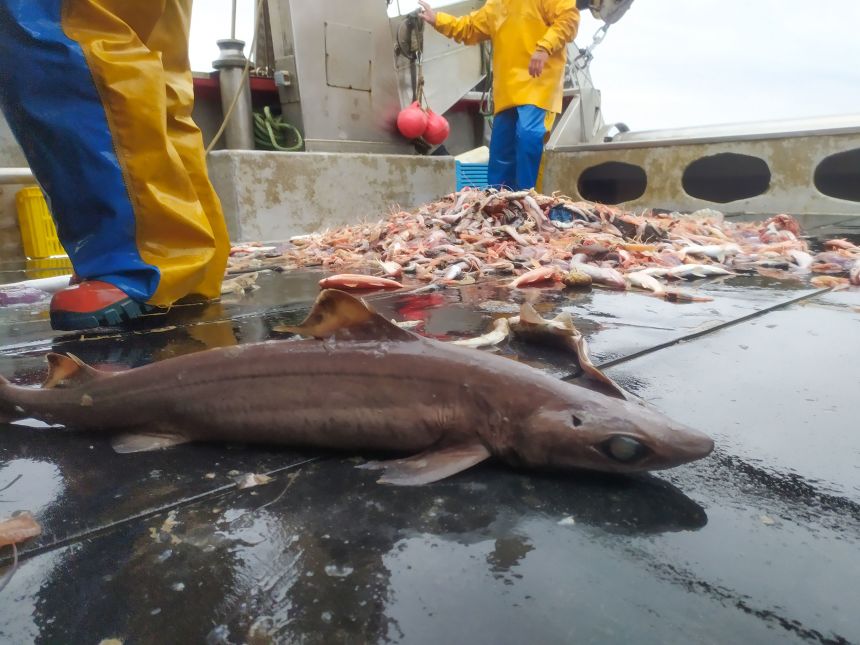
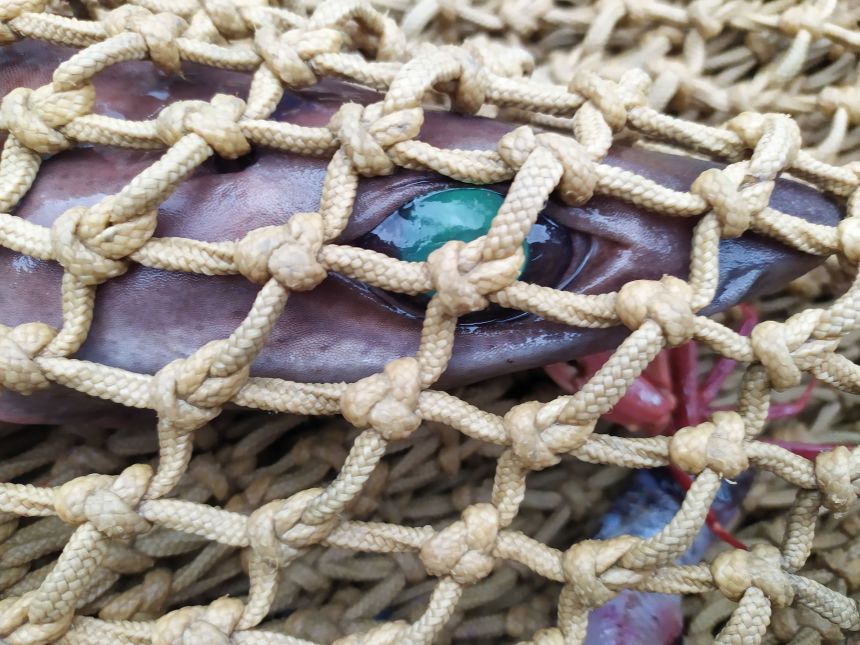
With their bright green eyes and slender bodies, gulper sharks are odd-looking, prehistoric creatures that have been around for millions of years. Found worldwide in waters from 200 to 1,500 meters (650 to 4,900 feet) deep, much about them remains a mystery.
But now, they face a crisis. Three quarters of gulper shark species are threatened with extinction, targeted for their liver oil, which is particularly rich in a chemical compound known as squalene, commonly used in cosmetics for its antioxidant and moisturizing properties. According to the International Fund for Animal Welfare (IFAW), shark liver oil has been found in a wide range of products from makeup, aftershave and sunscreen, to nicotine patches and hemorrhoid treatments.
New international trade protections, announced November 28 at the 20th conference of parties to the Convention on International Trade in Endangered Species of Wild Fauna and Flora (CITES), held in Samarkand, Uzbekistan, could turn the fate of these deepwater sharks around. In what has been hailed by IFAW as a “watershed moment” for marine conservation, more than 70 species of sharks and rays have been granted stronger protections against international trade.
Gulper sharks have been listed on CITES Appendix II, which regulates trade of the species across international borders and improves monitoring, while endangered whale sharks, oceanic white tip sharks and manta rays are among those that have been uplisted to Appendix I, which bans all commercial trade of the species and their products.
Luke Warwick, director of shark and ray conservation at the Wildlife Conservation Society, said in a press release that the latest decision could not have been more urgent: “Sharks and rays are the second most imperiled group of species on the planet, and many are running out of time … Today’s votes give them a real chance at recovery.”
The announcement is a particular win for the ocean’s deep-sea dwellers, which had previously been neglected by trade regulations. Before today, despite there being more than 145 sharks and rays listed in CITES Appendix II, none were deepwater species.
But as deepwater fishing becomes more common, driven by better technology and low fish stocks in shallow coastal waters, these species are increasingly at risk.
According to a 2024 study published in the journal Science that looked at the plight of 521 species of deepwater sharks and rays, nearly two-thirds of threatened deepwater sharks have been used in liver oil products. Gulper sharks, which can grow up to 2 meters (7 feet) in length, are particularly prized because their liver oil contains over 70% squalene, the highest percentage of any shark family. As a result, populations of gulper sharks have plummeted by more than 80% in some regions.
Matt Collis, senior director for policy at IFAW, explained that these declines have happened in the last 20 to 30 years. “That’s both as a consequence of understanding the value of gulper liver oil in particular, but also that fisheries are getting more sophisticated and are able to target deepwater species more easily than they were in the past,” he told CNN.
Such huge declines could be catastrophic for gulper sharks, which mature late in life and have slow reproductive rates. Once their populations are depleted, it can take years for them to recover. By one scientific estimate, the dumb gulper shark — so named as it appears lethargic when caught — is a species that has been severely overfished in Australia, and would take 86 years to recover just 25% of its original population size.
“They are more akin to the way mammals breed than any fish species,” said Collis. “That makes them really vulnerable to fishing pressure.”
But deepwater sharks are up against a multimillion-dollar industry. According to Grand View Research, a market research firm, the global squalene market size was estimated at $150 million in 2023. While 80% of that was sourced from plants, primarily olive oil, it noted that extracting one ton of squalene requires around 3,000 sharks. There is limited data on how much shark liver oil is traded annually — in 2012, global demand was estimated at around 2,000 tons.
The cosmetics and personal care industry is the biggest consumer of squalene, with a revenue share of over 70%. Some companies, such as L’Oreal and Unilever (which owns Dove, Vaseline and other beauty brands), committed to stop using shark liver oil in their products as early as 2008, opting for plant-based alternatives instead. Yet others have continued ––according to a 2015 global study by BLOOM, a French marine conservation organization, which tested 72 moisturizing creams, 20% contained shark squalene, including a high proportion of Asian brands.
Beauty brand Biossance has used squalane (chemically similar to squalene) derived from sugarcane since its inception in 2016 and a spokesperson told CNN via email that nowadays bioengineered plant-based squalane can mimic the moisturizing oils found in shark livers. “Our innovative products demonstrate that sustainable alternatives not only exist but also deliver superior results,” they said.
Collis said that while there is a pressure on brands to stop using shark liver oil and to be more transparent with labelling so that consumers can make informed decisions, the use of trade regulations is the most effective tool for protecting gulper sharks.
“CITES is one of the few international agreements that actually has a compliance mechanism attached to it,” he said. “So if countries carry on trading in large volumes without having done proper sustainability assessments, or if they’re not legally acquiring species, that can ultimately lead to trade suspensions. There’s a real incentive for countries to sort out their fisheries management if they want to carry on trading in these species.”
Biossance agreed that “regulating the trade of species targeted for cosmetic ingredients is the right step toward protecting marine biodiversity” and said that the CITES announcement will help to “accelerate the shift away from animal-derived ingredients in the cosmetics industry.”
In the last two decades, concerns about declines in gulper shark populations and calls for their inclusion on Appendix II have been consistently raised at CITES meetings. The latest proposal, led by the UK government, said the listing was overdue, noting that it is “necessary to regulate international trade (in gulper sharks) before populations further decline to the point where they require listing on Appendix I.”
As countries like the Maldives, which banned gulper shark fishing in 2010 after a 97% reduction in populations in 21 years, recently approved regulations to reopen gulper shark fisheries, international regulations are even more crucial in limiting trade, said Collis.
The landmark decision may help to save gulper shark species, before they are driven to extinction: “They’re not like other fish, they don’t recover at the same pace, they don’t reproduce at the same pace. They just can’t sustain this level of exploitation.”
link