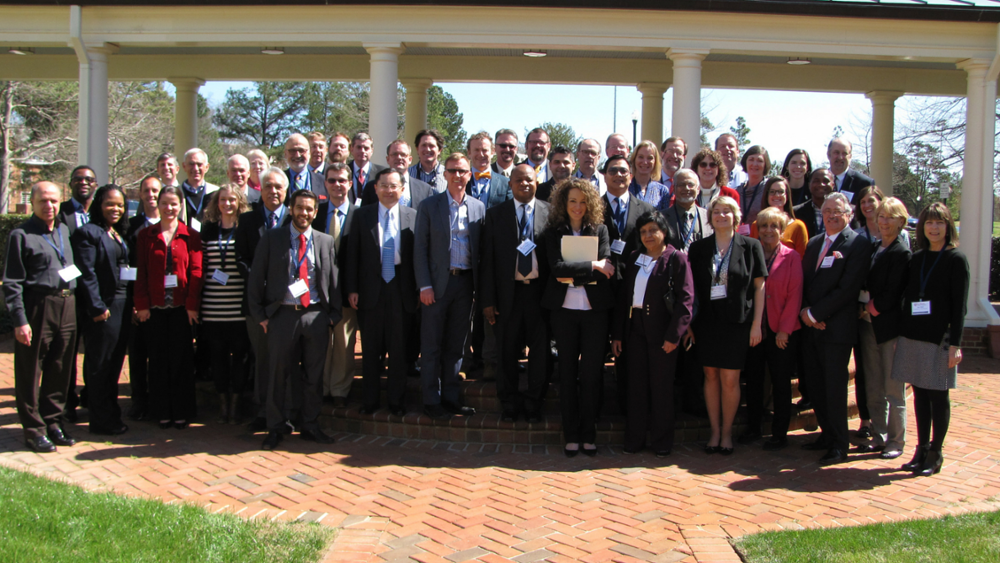
NEXUS 2025: Carlyle’s Brian Bernasek, Thoma Bravo’s Orlando Bravo, EQT’s Suzanne Donohoe, Advent’s Tricia Glynn, Silver Lake’s Joe Osnoss and Apollo’s David Sambur among the speakers

Good morning, Hubsters!
MK Flynn here with a special edition of the US Wire. I’m coming to you from PEI Group’s NEXUS 2025 summit in Orlando, where I’ll be for most of the week.
We’re expecting 650 private equity industry folks – up from 500 who attended the conference last year!
My day began with an insightful women’s breakfast, which I co-hosted with Emily Mendell, the executive director of the Private Equity Women Investor Network (PEWIN).
This afternoon, I’m looking forward to moderating a leaders panel about the “Mega Forces that can Reshape the World,” featuring Carlyle’s Brian Bernasek, Silver Lake’s Joe Osnoss and Apollo’s David Sambur.
Tomorrow, I’ll be conducting Fireside Chats on stage with Thoma Bravo’s Orlando Bravo and Advent International’s Tricia Glynn. I spoke with each of them ahead of the conference, and PE Hub premium subscribers may access those preliminary conversations here and here.
Also tomorrow, I’ll be chairing the High-Growth Sectors Track, which will cover life in the middle market; private equity’s role in the energy transition; and investing in AI and tech.
The Riverside Company’s Stewart Kohl, Sperry Mitchell’s Beatrice Mitchell and Bridgepoint’s Xavier Robert will be among the featured speakers in that track. PE Hub premium subscribers can read a preliminary interview with Robert here. (Note: Bridgepoint owns PEI Group, PE Hub’s publisher.)
This morning on PE Hub, we published a couple of stories previewing NEXUS content.
First up is a Q&A with Suzanne Donohoe, chief commercial officer at EQT, who’s speaking at the summit this afternoon.
And then I’ll share some compelling insights about what LPs really want from GPs, based on a survey conducted by PEI Group.
Pick and choose
Following a choppy couple of years for private markets fundraising and deployment, myriad green shoots are appearing that could lead to a brighter outlook for both fundraising and dealmaking, Suzanne Donohoe, chief commercial officer at EQT, told Madeleine Farman, the editor of Secondaries Investor.
Here’s an excerpt from the interview:
What are the key tailwinds for private equity from EQT’s perspective as we move into 2025?
I see several. Progress in public markets has addressed the denominator issue. That is both a fundraising piece, but it is also ultimately good for the performance of private equity as an asset class. If public markets are higher, the likelihood of achieving exits more successfully and exit windows being open is also true. It enables a slightly more benign fundraising environment, but also a better exit environment.
Now, investors need to be selective about where they deploy capital. Valuations are high at the headline level in US public markets. They’re more normalized in Europe. However, if you look under the hood at US valuation levels, it is more about the ‘Magnificent Seven’ than it is about broad markets, which are more subject to where private equity invests. There’s a lot more dispersion under the hood, offering opportunity for private investors to put money to work. The improvement in tone in the public markets helps heal some wounds and make some progress.
Interest rates normalizing and the direction of travel – even if interest rates stay where they are, but with some potential that they could keep reducing – is [heading in] a more supportive direction than we’ve probably had over the last two to two and a half years.
Obviously, the potential for trade wars or geopolitical disruption are balancing facts. People will be very selective about into which markets they deploy capital, and that’ll be at the GP level. Some LPs, depending on where in the world they are and what their particular circumstances are, may pick and choose which markets they want to lean into.
How are you thinking about deployment at the global level? Are there any particular themes that you’re really looking to lean into because of or despite what we’re seeing at specific regional levels?
I would break it down a couple of ways. One is that we are thematic investors and start from the standpoint of which sectors and companies we want to back. Then we have to think about the likely success of those companies in various end markets. We’re not like an index investor where we have to be everywhere. We can be very selective and tend to focus on areas with growth-orientated end markets like healthcare, technology, services. They tend to be less cyclical and [have] broadly supportive macro backdrops.
In terms of geography, we try to have ample breadth in any portfolio. The way we invest for most of our clients is that they give us a mandate for, let’s say, pan-Asia. And so we actually have a tonne of breadth within that to execute in the best way for both the types of opportunities that become available because of us building relationships with sellers or management teams or whatever it might be, and then also for the environment.
If it becomes, in the near term, a more dicey proposition to invest in a particular market, we just don’t invest there. We have enough breadth that we can make that choice without compromising on the mandate that clients have hired us for.
If you’re at NEXUS, check out Donohoe’s Fireside Chat this afternoon.
Survey says
When PEI Group asked more than 100 LPs what they wished GPs best understood about their needs, we knew we would uncover frustrations, but even we were surprised by the passionate responses.
From the need for more transparency over risks to pleas for greater acknowledgement of liquidity concerns, the respondents identified seven key areas where they believe there is a significant mismatch in LP and GP expectations.
Respondents hailed from around the globe. They included some of the world’s biggest institutional investors in Europe and the US, and also leading Canadian pension funds and Japanese life insurers.
Here are the top three concerns that emerged from the survey:
Reporting consistency and data quality
“Talk to me, Goose!” This Top Gun cry came from a director at a private markets investor with experience across asset classes. His frustration encapsulated one of the biggest sources of friction between GPs and LPs: inconsistency in the way that GPs share information with LPs.
Reporting standards are another bone of contention. A portfolio manager at a Canadian public-sector investor noted: “Consistency of information across GPs would greatly increase the amount of time LPs have to engage on issues, but information quality is lacking – every GP has its own process.”
Risk transparency and honest communication
LPs want GPs to be straightforward. When asked what LPs wished GPs understood they needed, the head of finance at a Canadian insurer replied: “Being forthright about the risks they are taking, not over-selling the risk return. Our job is to take risk; we want to know what they are.”
Being upfront about the numbers was a common request. There was clear sense from LPs that GPs bury the bad news and don’t – in the words of a portfolio manager at a Japanese insurer – “fully disclose any potential downsides.”
“What matters is valuation at portfolio level,” said an exec at a leading Asian LP. “[There’s] too much highlighting the individual asset level, which feels like avoiding the portfolio level topic, which is the key.”
Liquidity and exit challenges
It was clear from our research that LPs want GPs to demonstrate concrete exit strategies, rather than rely on strategies such as continuation funds and fund finance.
“Continuation funds are not true exits and the LP time requirement to deal with them is significant,” said one managing director at a New York-based insurer. “Additionally, the inability to opine on the documents in any meaningful way is problematic. We have begun passing on managers who do them for the wrong reasons.”
The conversation about the LP-GP dynamic will continue at NEXUS 2025, as delegates have the chance to tell us directly how they view the relationship between investors and fund managers: Where are the pain points? How can both sides work together to build trust and transparency? What needs to change? Prize-winning illustrator Jenny Leonard will be on site recording your immediate responses on two large canvasses. The interactive artwork Jenny produces over two days will be a visual representation of this live conversation.
For all of PE Hub’s NEXUS-related content, click here now and throughout the week.
And if you’re here at the summit, please say Hello. Please introduce yourself to me and to PE Hub reporter Rafael Canton, who will be bringing you NEXUS coverage all week. (Our email addresses are: [email protected] and [email protected])
Hope to see you here!
MK
link